 REVIO NEWS
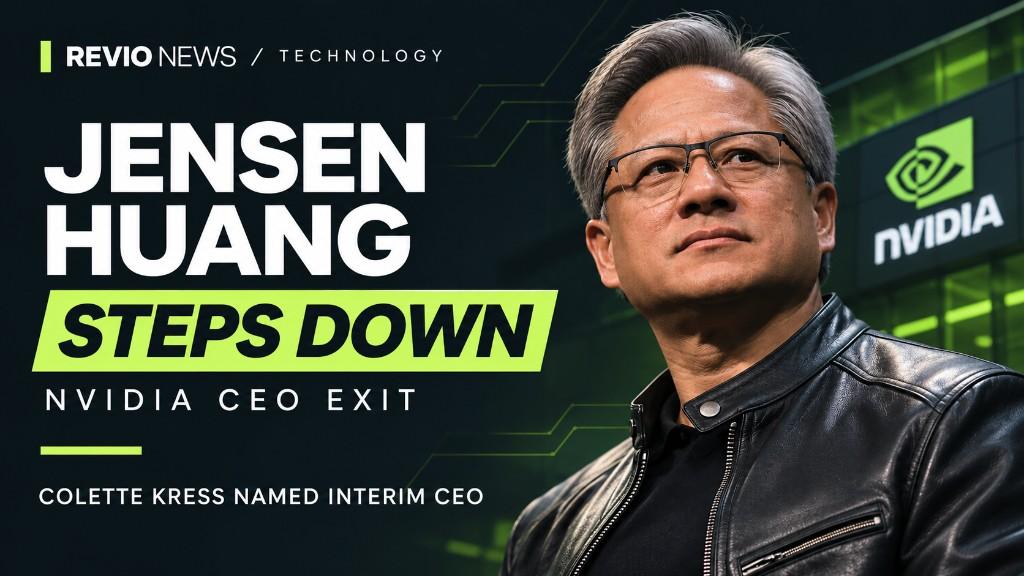
Jensen Huang, the co-founder and longtime chief executive of Nvidia, has resigned from the company with immediate effect, marking a dramatic leadership change at one of the world's most influential technology companies.
The announcement came on Thursday, November 12, following days of intense scrutiny surrounding reports of Huang's alleged personal relationships, including one involving a businesswoman suspected by US authorities of having links to Chinese intelligence.
Nvidia's Chief Financial Officer, Colette Kress, has been appointed interim chief executive as the company's board begins the process of identifying a permanent replacement.
Huang's departure marks a significant moment for Nvidia, which became a central force in the global artificial intelligence boom under his leadership.
What happened to Jensen Huang?
Huang's resignation followed a week of growing controversy involving allegations about his personal relationships and possible national security concerns.
Reports identified a businesswoman named Alice Huang, a former executive at Singapore-based technology company Megaspeed International, as the person involved in one alleged relationship. US authorities reportedly suspected her of having connections to Chinese intelligence.
The allegations attracted attention because Nvidia's advanced AI chips are strategically important in the technology competition between the United States and China.
Separately, reports also alleged that Huang had a relationship with an Nvidia executive who reportedly worked under him. The Associated Press said it could not independently confirm the reports about this second relationship.
The developments prompted questions about corporate governance, executive accountability and the potential security implications for a company whose products are central to the global AI industry.
Nvidia appoints Colette Kress as interim CEO
Following Huang's departure, Nvidia appointed its Chief Financial Officer, Colette Kress, as interim chief executive.
Kress joined Nvidia in 2013 and has played a major role in the company's financial operations during its transformation into a global technology powerhouse.
Before joining Nvidia, she held senior finance positions at companies including Cisco, Microsoft and Texas Instruments.
The company is expected to consider both internal and external candidates while searching for a permanent CEO.
Nvidia's board has expressed confidence in Kress and the existing leadership team, indicating that it expects the company's operations, customer commitments and product roadmap to continue without interruption.
Why the allegations raised national security concerns
The controversy extends beyond Huang's personal life because of Nvidia's position in the global semiconductor industry.
Nvidia designs some of the world's most advanced graphics processing units (GPUs), which are widely used to train and run artificial intelligence systems. These chips have become strategically important to governments, technology companies and research institutions.
The United States has imposed restrictions on exports of advanced computing chips to China, citing concerns about their potential military and strategic applications.
Reports concerning Alice Huang raised questions about whether business relationships could have created opportunities for sensitive information or restricted technology to reach unauthorised parties.
However, it is important to distinguish suspicion from established fact.
Chinese authorities have rejected the espionage allegations. Singaporean authorities have also clarified that their investigation into related business dealings did not involve an espionage investigation into Alice Huang. They said there was insufficient evidence that she had committed offences in the matter they examined.
Nvidia has said it has no reason to believe that company secrets or national security were compromised.
The allegations have not established that Nvidia's technology was transferred to a foreign intelligence agency.
Nvidia shares face market pressure
Huang's resignation sent shockwaves through financial markets.
Nvidia shares fell sharply following the announcement, with reports indicating that the stock dropped by as much as approximately 14% during trading.
The reaction reflects the importance investors place on Huang's leadership. For more than three decades, he was not only Nvidia's chief executive but also the public face of its transformation from a graphics-chip manufacturer into a dominant supplier of AI computing infrastructure.
The company has become one of the most valuable businesses in the world, benefiting from enormous demand for GPUs used in data centres and generative AI systems.
Investors will now be watching whether Nvidia can maintain its growth trajectory and execute its product roadmap under a new leadership structure.
Who is Jensen Huang? The man behind Nvidia's AI rise
Jensen Huang co-founded Nvidia in 1993 and helped build the company into a major force in graphics processing and accelerated computing.
Initially known for its GPUs used in gaming and computer graphics, Nvidia gradually expanded into professional visualisation, scientific computing, data centres and artificial intelligence.
Its CUDA software platform and GPU architecture helped establish the company as a key supplier for modern AI development.
As demand for generative AI increased, Nvidia's chips became essential infrastructure for companies building large-scale AI models and services.
Huang became one of the most recognisable figures in the technology industry, often appearing publicly in his signature black leather jacket.
His departure therefore represents more than a conventional executive transition. It marks the end of an era for a company whose identity and strategic direction have been closely associated with its co-founder.
What happens next for Nvidia?
Nvidia now faces two major challenges: managing the leadership transition and maintaining confidence among investors, customers and government stakeholders.
Colette Kress will oversee the company in the interim while the board searches for a permanent chief executive.
The company will also need to address questions surrounding corporate governance, internal controls and the scrutiny connected to the allegations.
For the wider AI industry, the change raises questions about how Nvidia will manage its relationships with governments, chip manufacturers, cloud providers and major AI developers.
Nvidia's technology roadmap and existing business operations remain critical to the global AI ecosystem. Whether the company can navigate this transition without disrupting its momentum will be one of the biggest stories to watch in the technology sector.
One thing is certain: Nvidia is entering a new chapter, and the world of artificial intelligence will be watching closely.
Key facts
- Company: Nvidia
- Former CEO: Jensen Huang
- Interim CEO: Colette Kress
- Resignation announced: November 12, 2026
- Effective date: Immediate
- Reason: Resignation amid reports and allegations involving personal relationships and national security scrutiny
- Permanent successor: Not yet announced
This article distinguishes confirmed company announcements from allegations reported by media outlets. Allegations of espionage have not been established as fact.